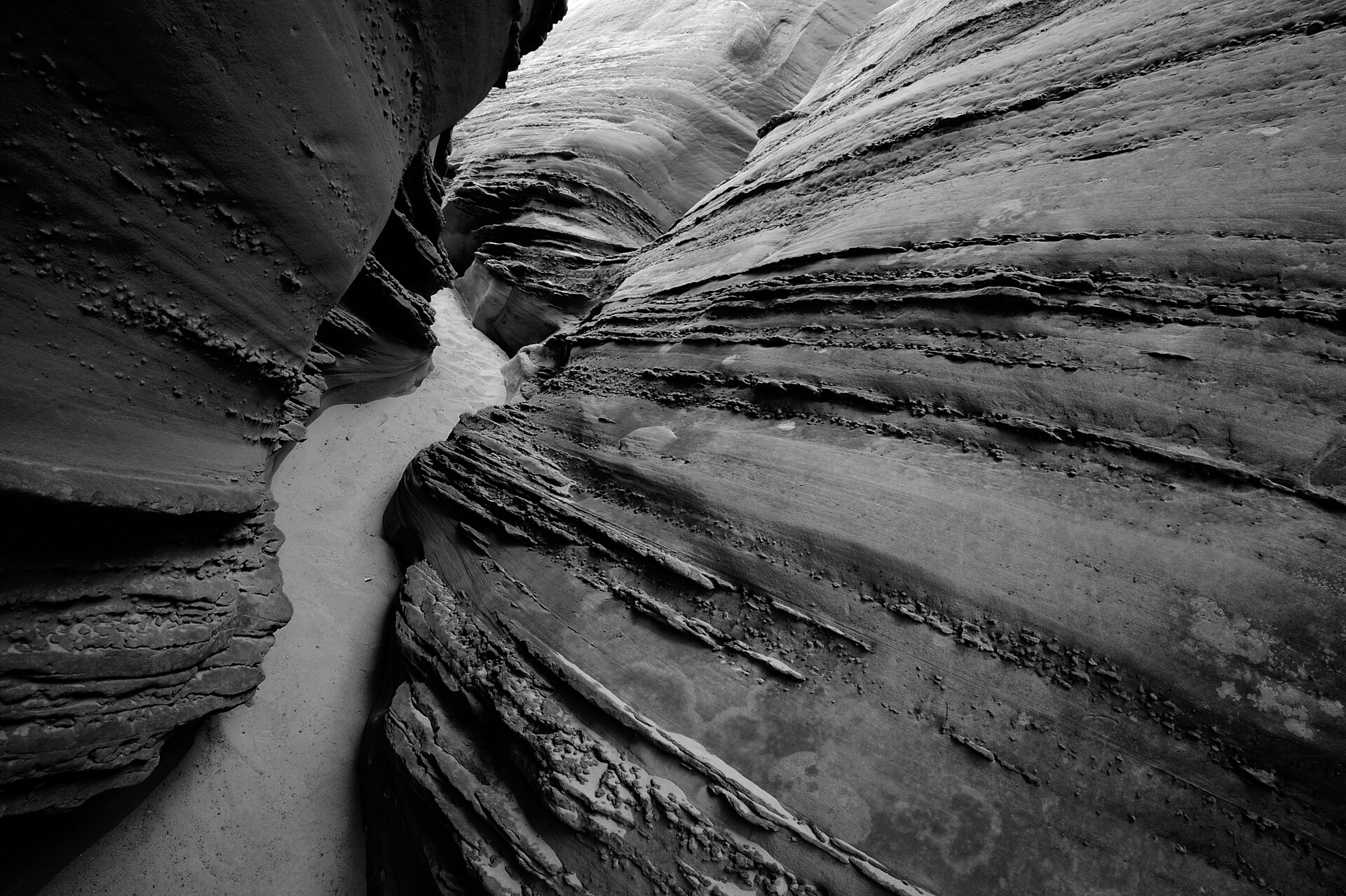

Antelope Canyon is the slot canyon everyone has seen in a photograph and almost no one has walked alone, and there is a good reason for both. It sits on Navajo Nation land just east of Page, Arizona, it is sacred to the people who own it, and since a flash flood killed eleven visitors in 1997 it has been open only with a Navajo guide. Understanding those three facts before you book will make the visit better.
Two canyons, one wash
Antelope Creek drains the plateau south of Lake Powell and cuts through the Navajo Sandstone in two famous sections on either side of the highway. Upper Antelope Canyon, called Tse bighanilini in Navajo, is the one with the light beams. It is a flat, sandy corridor of a few hundred feet at ground level, with walls that close overhead like a cathedral. You walk in one end and back out the same way, and the whole tour, including the truck ride from the meeting point, takes around an hour and a half.
Lower Antelope Canyon, Hasdestwazi, is on the other side of the road and is the opposite shape: a V open to the sky at the top, narrow at the bottom. You enter down steel stairways and ladders, squeeze through a longer, twisting passage of tighter turns and climb out at the far end. It is more physical, less of a cathedral and more of a spiral, and the colours run to oranges and purples rather than the deep reds of the upper canyon. If you have knee or mobility issues, Upper is the easier choice; if you like ladders and a bit of scrambling, Lower is the more engaging hour.
Several other slot canyons on the same drainage, with names like Canyon X, Rattlesnake, Owl and Cardiac, are run by Navajo families with smaller groups and fewer people jostling for the same view. They lack the iconic beam but often deliver a quieter, more personal visit.
Permits, guides and what it costs
You cannot visit on your own. The canyons are within a Navajo tribal park, and entry is by guided tour only, booked through one of the authorized Navajo operators. Each tour price includes or adds a tribal park permit fee that goes to the Nation. Expect the total for a standard tour of either canyon to fall somewhere in the range of a nice dinner for two per adult, with children a little less, and specialized photography or private tours costing considerably more where they are offered. Check the tribal parks website and the operators’ own pages for current fees and rules, because both have changed several times in recent years.
Book early. Peak-season slots around midday in Upper Antelope sell out weeks and sometimes months ahead. Bring photo identification, arrive at the meeting point well before your time, and expect a security-style check of your bag. Backpacks, tripods, monopods and large camera bags are generally not allowed on standard tours. Phones and cameras are fine. Water is fine and recommended.
One practical trap catches visitors every year: the Navajo Nation observes daylight saving time and the rest of Arizona does not. From spring to fall, a tour booked at ten in the morning Navajo time is nine in Page. Confirm which time the operator means and set your phone accordingly.
Chasing the light
The beams in Upper Antelope happen when the sun stands high enough to shine straight down through the openings in the ceiling. That means roughly late March to early October, and within that, a window around late morning to early afternoon. Outside those weeks the sun is too far south and the light arrives as a soft, reflected glow rather than a shaft. Guides know the schedule down to the minute and often toss a handful of sand into the air to make the beam visible.
The glow, honestly, is underrated. In November, December and January the walls of both canyons light up in even, gentle colour, the crowds are a fraction of summer, and you can stand still for a moment without a hand on your shoulder. If you are after a photograph rather than the postcard photograph, winter is a good bet.
- Upper, midday, summer: beams, heat, and the biggest crowds of the year.
- Lower, morning or late afternoon: softer, more textured light on the spiral walls, and cooler air.
- Either canyon, winter: quiet, deep colour, no beams.
Water, heat and the flood that closes the canyon
Page sits at about four thousand feet and summer afternoons commonly pass a hundred degrees. Tours are short, but the waiting areas and truck rides are in full sun; a hat, a litre of water and closed shoes go a long way.
Flash floods are the real hazard, and they are why the guides exist. Rain far up the drainage, out of sight on the plateau, can send a wall of water and debris through the slot under a clear sky. Operators monitor the weather and close both canyons at the first sign of risk, sometimes with an hour’s notice, and they refund or reschedule. If your tour is cancelled, thank the guide rather than arguing. The people who died in 1997 were in Lower Antelope on a sunny day.
A night nearby
There is no camping in or near the canyons themselves, but you are a short drive from some of the best desert camping in the Southwest. On the Lake Powell side, developed campgrounds around Wahweap offer showers and shade structures, while the beach camping along the shore on public land a few miles west is primitive, cheap and unforgettable: pull in, pitch a tent on the sand, and watch the lake turn copper as the sun drops behind the Vermilion Cliffs. Expect a modest per-vehicle fee for the beach, more for developed sites. Wind is the price; stake the tent properly and put the stove in the lee of the truck.
Respect and common mistakes
This is someone’s land and, in a very real sense, someone’s church. Stay with your guide, do not touch or climb the walls, do not carve or scratch anything, and keep the noise down. Ask before photographing people. Tipping the guide is customary.
- Expecting a hike: it is a guided walk of about an hour. Bring hiking ambitions to Lake Powell or the Paria instead.
- Getting the time zone wrong: the most common way to miss a booked tour.
- Booking Upper for the ladders or Lower for the beams: read the description twice.
- Arriving without water or ID: both are checked.
- Bringing a tripod: it will stay in the car.
Worth the guide and the wait
Antelope Canyon is not wilderness and it does not pretend to be. It is a short, crowded, supervised hour in one of the most beautiful pieces of rock on the planet, hosted by the people who have cared for it longest. Go with that expectation, pick your canyon and your season with the light in mind, and you will leave happy.
Read next: Best Hikes in Red Rock Canyon NV: Trails by Level and Season
