
No single shoe is perfect for canyon country, because canyon country is three different surfaces that show up on the same day. Bare sandstone that grips like sandpaper when dry and turns to soap when wet. Deep sand that fills every shoe and grinds skin off heels. And narrows where you will wade for hours in cold water over cobbles you cannot see. Choosing footwear is about deciding which of these dominates your trip, and being honest about the tradeoffs.
Slickrock: friction is everything
Dry Navajo and Wingate sandstone offers some of the best friction in the world, which is why people happily walk up slopes that look absurd. The catch is that this friction depends on rubber, not lugs. Deep, widely spaced lugs designed for mud put very little rubber on the rock; a flatter, softer sole with more surface contact grips far better. Approach shoes, the climber-hiker hybrids with sticky rubber and a smooth toe, are the classic slickrock choice for good reason.
Two warnings. First, sticky rubber wears quickly, and a sole that is polished glassy after a season loses much of its advantage. Second, wet slickrock, or slickrock with a dusting of sand or algae, is genuinely slick, and no shoe fixes that. On steep wet rock the technique is to keep your weight over your feet, use flat-footed smearing, and avoid edging.
- Look for: a sole with fine, shallow tread and a soft compound, a snug fit at the heel, and a toe that does not flop.
- Avoid: heavy leather boots with hard, chunky outsoles; they are stable on trail and treacherous on steep rock.
Sand: the slow grind
Deep sand in washes is not dangerous, just exhausting and hard on skin. Sand works into the shoe, sits under the sock, and rubs. After a few miles you have hot spots, and after a few more you have open blisters. The fix is not a different shoe but a barrier: low gaiters that seal the gap between shoe and ankle. Even simple stretch gaiters make a huge difference. A wider toe box helps too, because feet swell in heat, and a shoe that was fine at 7 am can be painful at 3 pm.
Stop when you feel a hot spot. Sit, dump the sand, and tape the spot before it opens. A minute spent on a hot spot saves a trip; a blister opened on day one of a four-day canyon trip is a genuine problem, because sand and water will get into it repeatedly.
Wet narrows: cold, cobbles and current
This is where most people get it wrong. Walking a river narrows or a slot with pools means your feet are wet for the whole day, the water is often 45 to 60°F (7 to 15°C) even in summer, and the bottom is rounded cobbles and unpredictable holes. Sandals are a bad idea: toes get smashed, straps rub raw, and cobbles slip between foot and sole. You want a closed shoe that drains, protects the toe, and grips wet rock.
Three approaches work. The simplest is a trail runner with a mesh upper and a sole that is not too aggressive, worn with a neoprene sock in cold water. Dedicated canyoneering shoes take this further with drainage ports and sticky rubber. For long, cold narrows in spring and fall, outfitters near the well-known river canyons rent thick neoprene socks and boots, and it is worth it: cold feet lose feeling, and feet without feeling stumble.
- Neoprene socks (2 to 3 mm): the single most useful item for wet canyons. They keep feet warm and buffer the rubbing that wet skin suffers.
- Drainage: shoes that hold water become heavy weights; mesh and drain holes matter.
- Toe protection: a rubber toe bumper, because you will kick a hidden rock.
- A trekking pole: not footwear, but the difference between feeling for the bottom and falling in.
One trip, three surfaces: how to choose
Ask what fraction of your day is spent on each. A day hike on slickrock domes: approach shoes. A multi-day backpack through sandy washes and benches: light hikers or trail runners with gaiters. A river narrows: a wet shoe with neoprene socks, and maybe a second dry pair for camp. Most canyon backpacking mixes the first two, and a well-fitting trail runner with a moderate sole is the honest all-rounder. Carrying a second pair of shoes is rarely worth the weight, except a pair of light sandals or foam clogs for camp, which also serve for a short wade.
Boots or shoes?
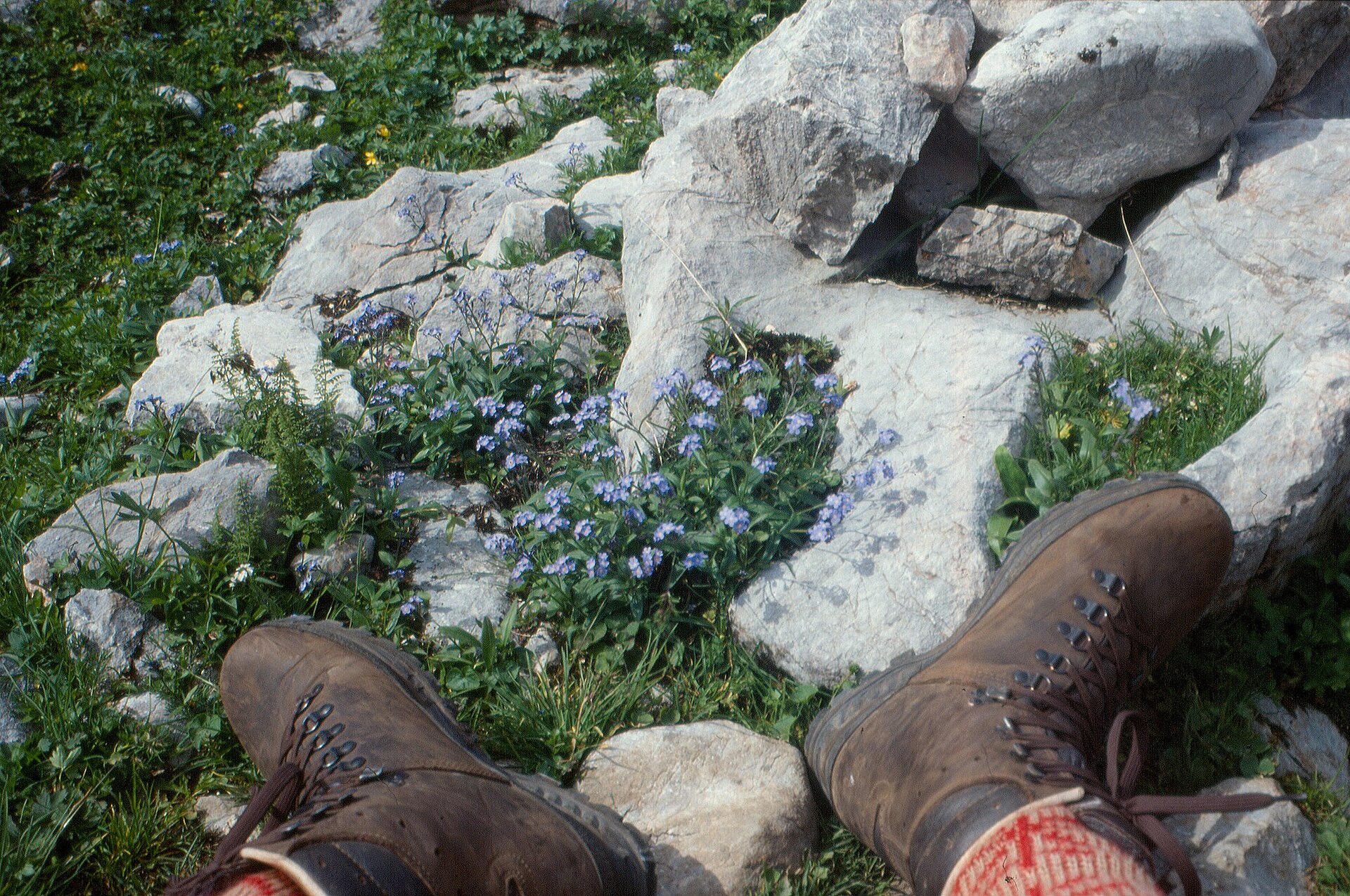
The old rule was ankle support. In practice, most canyon ankle injuries happen on loose talus and steep descents, not on flat washes, and a stiff boot does help there. But boots are hot, heavy, slow to dry and clumsy on slickrock. Unless you carry a heavy pack over a lot of talus, a mid-cut light hiker or a trail runner is the better choice in canyon country. Strengthen your ankles at home instead of relying on leather.
Socks, care and the small things
Wool or synthetic socks, never cotton. Two pairs per day on sandy trips, so one is drying while you wear the other. Rinse sand out of socks at every break where water allows. Trim toenails before the trip; long nails on steep descents lose the nail. Break shoes in for at least thirty miles before a big trip. Bring a small blister kit and know how to use it.
Early in a long trip through the lower reaches of a Utah river canyon, I wore a pair of old trail runners with cushioned foam and no drainage. By the third hour of wading they weighed like bricks and squelched grit against my heels with every step. A companion in mesh water shoes and neoprene socks walked past me with dry-looking feet and no complaints. I have carried neoprene socks on every wet canyon trip since.
The short version
Sticky, flatter rubber for rock. Gaiters and room to swell for sand. A draining shoe with neoprene socks for water. Choose for the surface you will spend the most time on, take care of hot spots immediately, and treat your feet like the equipment they are. They are the only thing standing between you and the canyon floor.
