
Canyon country looks tough. The rock is old, the cliffs are enormous, and the empty distances suggest that nothing you do could possibly matter. The opposite is true. Desert soils, springs and archaeological sites are among the most fragile things you will ever walk past, and the marks people leave here last for decades. Leave No Trace in the Southwest has its own rules, and they start before you reach the trailhead.
Permits are part of protecting the place
Most of the best canyons now require some form of permit: a lottery for the famous slots, a backcountry permit for overnight trips in national parks, a free self-registration at many BLM and Forest Service trailheads. It is tempting to treat this as bureaucracy. It is actually the main tool land managers have to keep group sizes down, spread use across campsites, and know who is out there when a flood or a search happens.
Read the permit conditions. They often include a maximum group size (commonly twelve, sometimes six in narrow canyons), a rule about where you may camp, whether fires are allowed, and whether human waste must be carried out. Many canyon corridors along the Colorado and in popular Utah drainages now require a waste bag system for solid waste, and rangers do check.
- Apply early: lotteries for the best-known slots open months in advance.
- Carry the paper: or a screenshot; there is no signal to download it later.
- Register even when it is free: the trailhead register is how a search team learns you exist.
Cryptobiotic soil: the crust that holds the desert together
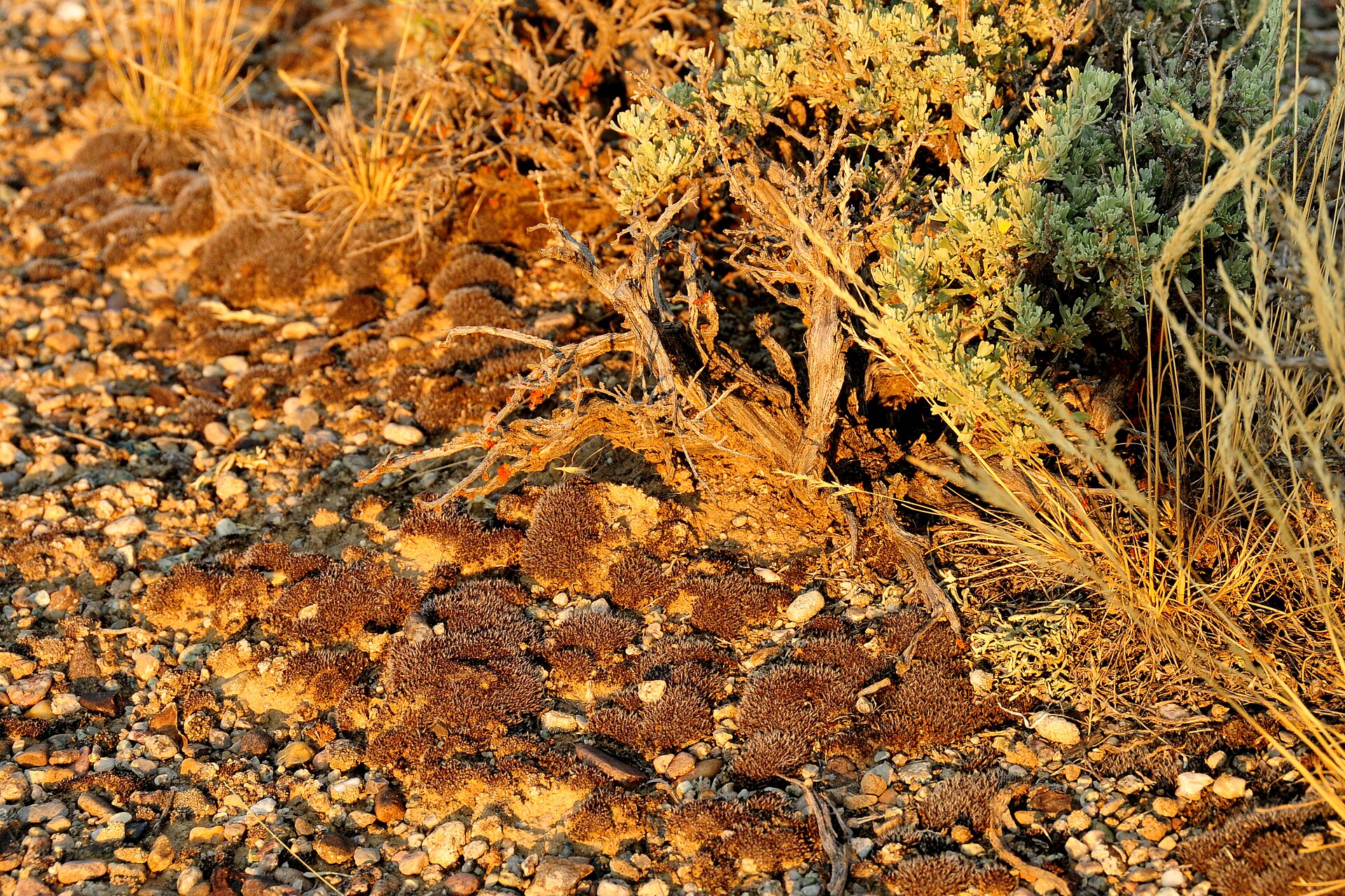
Look at the ground beside a sandy trail on the Colorado Plateau and you will see a dark, lumpy, almost burnt-looking crust. That is cryptobiotic soil: a living mat of cyanobacteria, lichens, mosses and fungi. It fixes nitrogen, holds moisture, and, most importantly, glues the sand in place so wind and rain cannot strip it. Almost everything that grows in the desert depends on it.
One footprint crushes it, and it does not spring back. Recovery of the visible dark crust takes on the order of fifty years, and full function longer still. A shortcut across a bench that took you thirty seconds may still be visible in the middle of the century. This is why the old joke about tiptoeing through the desert is not a joke.
Where to walk instead
- Established trails: if a track exists, use it, even when it is sandy and slow.
- Slickrock: bare sandstone is the most durable surface in the desert. Route across it whenever you can.
- Washes: the sandy floor of a dry wash is scoured by every flood and carries no crust. It is the natural highway.
- Single file: where you must cross fragile ground, walk in one line and step in each other’s prints.
Cairns: helpful, harmful, and mostly unnecessary
Rock cairns mark routes across slickrock where no trail can be worn in. On a marked route, a cairn set by the managing agency may be the only thing keeping a hundred hikers from spreading across a bench of crust. Leave those alone. Do not knock them down and do not build extra ones nearby to make them look bigger.
The problem is the other cairns: the piles built to say I was here, the towers stacked at viewpoints, the duplicate markers that split one route into three. They mislead people in fog and dusk, they spread the impact wider, and moving rocks disturbs the small creatures and soil beneath them. If you feel lost, use your map, not a pile of stones. If you find cairns that clearly mark a bogus route into a dead end, it is reasonable to report them to the ranger station rather than to dismantle them yourself.
Water and waste in a dry land
Water is life in canyon country, and every spring is shared with bighorn, frogs, and the next hiker. Camp at least 200 feet (about 70 adult paces) from any water source, fill your bottles and move away, and never wash, use soap or swim in potholes and small pools. Even biodegradable soap does not break down in a pothole; it just poisons it slowly.
Human waste is the hard one. In most desert soils, buried waste does not decompose in any useful timeframe; the ground is too dry and too sterile. Where the rules require it, use a commercial waste bag and carry it out. Where catholes are allowed, dig six to eight inches deep in organic soil, not sand, well away from washes that flood, and pack out the toilet paper. In slot canyons and along river corridors, carrying out everything is the only acceptable option.
Ruins, rock art and things that should stay where they are
The canyons of the Four Corners are full of the homes, granaries and paintings of people who lived here for thousands of years. Every one of these sites is protected by federal law, and every one of them is degraded a little by each visitor. Do not touch rock art; skin oils accelerate its decay. Do not enter structures or climb on walls. Do not move, pocket or arrange potsherds, corn cobs or flakes, even to photograph them. The arrangements people make for photos destroy the context archaeologists need.
The same goes for the natural items: no collecting of petrified wood, crystals, fossils or feathers on public land, and no carving, chalking or painting on rock. A name scratched on sandstone will outlast you.
Camp like you were never there
Pick a site that is already bare, on slickrock or sand, away from crust and above the flood line. Keep the group small, stay one or two nights, and resist the urge to improve the site with rock walls, benches or fire rings. In the morning, sweep the sand smooth with a boot, scatter any gravel you moved, and walk the perimeter looking for micro-trash: twist ties, tape, the corner of a food wrapper. Fires, where allowed, belong in a fire pan or on bare rock, burnt to ash, never in a new ring.
I once returned to a bench in a side canyon of the Escalante three years after camping there and found my own tent footprint still faintly visible in the crust beside the slab we had actually slept on. It was a humbling correction. The desert keeps very good records.
Why it is worth the effort
Leave No Trace in canyon country is not about rules for their own sake. It is about the fact that this landscape does not heal on a human timescale. Walk on rock, carry your waste, leave the cairns and the ruins alone, and the next person will find the canyon the way you did: quiet, uncrowded, and entirely itself.
