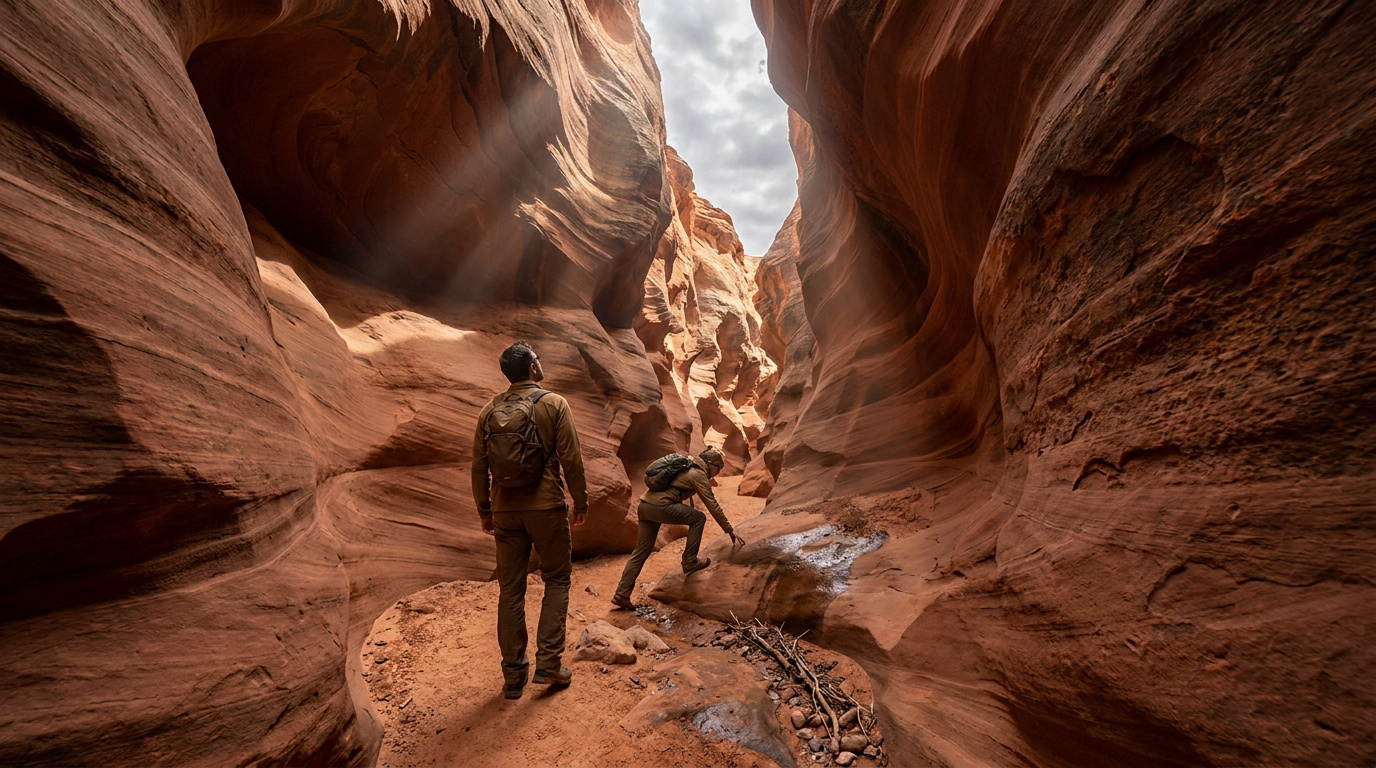

Key takeaway: Slot canyons act as natural funnels where slickrock triggers immediate, lethal runoff. Even distant storms miles away can create a wall of water traveling at 30 feet per second. Survival depends on monitoring entire drainage basins and treating a Flash Flood Watch as a mandatory “no-go” signal, as water levels can rise catastrophically in seconds without local rainfall.
Water velocity in a slot canyon can reach 30 feet per second during a flash flood, transforming narrow sandstone passages into lethal traps in mere seconds. This immense hydraulic force, often carrying heavy debris and mud, is capable of snapping mature trees like toothpicks and reshaping the geological landscape instantly.
The danger is that a storm hitting a plateau miles away can trigger a surge even under perfectly blue skies. Mastering how to read flash flood risk is vital for your safety, so we will examine the environmental cues and weather data needed to navigate these desert systems securely.
- Flash Flood Risk In Slot Canyons Defined
- 3 Environmental Cues That Scream Danger
- How To Decode Official Weather Alerts?
- Safety Protocols And Go/No-Go Criteria
Flash Flood Risk In Slot Canyons Defined
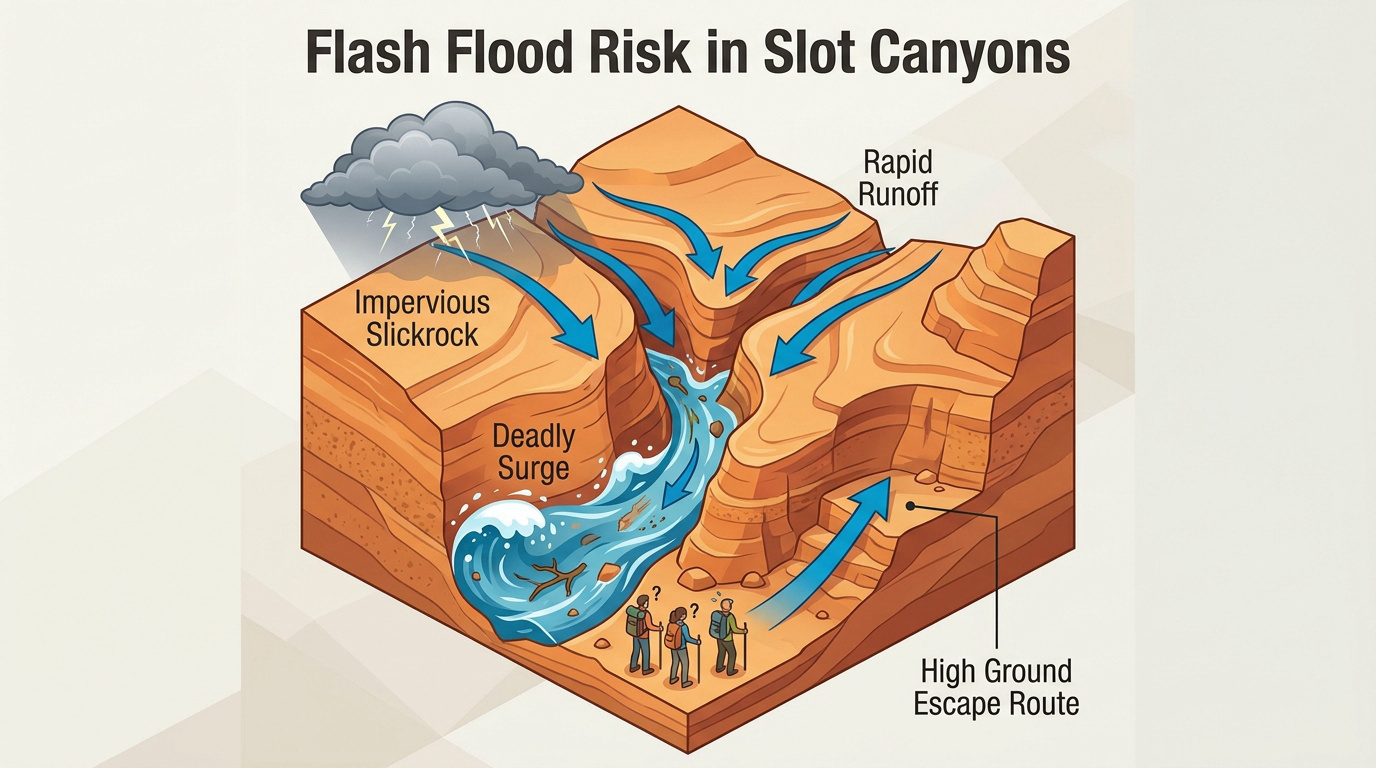
Slot canyons turn into death traps when distant storms hit impervious sandstone plateaus. Water velocity reaches 30 feet per second, carrying lethal debris loads. Survival hinges on identifying watershed connectivity and high-ground escape routes before entering steep rocky terrain.
Navigating these narrow corridors requires a deep respect for the unforgiving relationship between sandstone and gravity.
Hydrological Factors And Runoff Speed
Slickrock acts exactly like concrete. Rainwater cannot soak into the parched ground here. Instead, it collects instantly in narrow channels. This creates a massive, violent surge within minutes of a storm hitting the plateau above.
You only have seconds to react to the change. A dry wash becomes a roaring river instantly. Escape is often impossible once the wall of water appears. The speed is simply too great for human movement.
The physical force is staggering. Water pressure snaps mature trees like toothpicks. Thick mud adds immense weight to every impact, crushing everything in its path.
Gravity turns a simple rain shower into a liquid hammer.
Remote Rainfall And Basin Scale Effects
Storms miles away are the real killers. You might see blue sky above your head. Meanwhile, a massive drainage basin is funneling water toward your specific location right now.
Arid regions rely on watershed connectivity. Arroyos act as natural pipes. They transport thousands of gallons across vast distances. A flood can strike hours after the rain stops in the high country.
Don’t trust local weather. Check the entire basin before you drop in.
Distance offers no protection. The desert floor is a connected hydraulic system.
3 Environmental Cues That Scream Danger
While understanding the physics of water is vital, you must also train your eyes to spot the subtle shifts in the environment that signal an approaching surge.
Water Clarity And Sudden Level Changes
Watch the water color closely. Clear streams turning chocolate brown mean upstream erosion. This is the vanguard of a flood. Muddy water carries the weight of the mountain.
A sudden drop in water level is a massive red flag. The water is backing up behind debris.
Listen for a low rumble like a distant freight train. That sound is boulders grinding together. If the ground vibrates, you are out of time. Move to high ground immediately without looking back.
Nature usually gives one final, silent warning before the roar.
Burn Scars And Debris Flow Intensity
Fire-damaged land changes everything. Without vegetation, the soil becomes hydrophobic. Rain just slides off the surface. This creates a thick slurry of ash, mud, and charred wood.
Debris flows are much denser than water. They act like wet concrete flowing at high speeds. Logs and ice jams create temporary dams. When these dams burst, the resulting surge is catastrophic and unpredictable.
Avoid drainages below recent fires. The risk remains high for several years.
Ash makes the water toxic. It also hides deep holes and sharp rocks.
How To Decode Official Weather Alerts?
Beyond physical signs, professional meteorologists provide data that can save your life, provided you know how to interpret their specific terminology.
Flood Watches Versus Flood Warnings
A Flash Flood Watch means the ingredients are there. The atmosphere is primed for heavy rain. It does not mean it is happening yet. Stay alert and have an exit.
A Flash Flood Warning is a different beast. It means a flood is happening or imminent. Death is possible.
Never enter a canyon during a warning. Even a watch should make you reconsider your plans. Weather in the desert is volatile. Conditions change faster than the National Weather Service can update their website.
Treat every alert as a direct order to stay high.
Monitoring Tools And Satellite Data
Use real-time radar before you lose signal. Check for cells hovering over the headwaters. Local gauges show if the water is already rising. Data is your best defense.
Cell phones are useless in deep slots. The sandstone walls block every signal. You cannot rely on a weather app once you are inside. Download your maps and forecasts while you still have bars.
Satellite messengers are better but slow. They might not send alerts in time.
Trust your eyes over your phone. Technology fails in the deep desert.
Safety Protocols And Go/No-Go Criteria
Armed with data and environmental awareness, you must now establish rigid rules that dictate whether you step into the canyon or stay on the rim.
Establishing Firm Decision Frameworks
Set a zero-tolerance policy for rain. If the forecast shows a twenty percent chance, stay out. Uncertainty always means no entry.
Check the sky in all directions. Dark clouds on the horizon are a deal-breaker. Trust your gut feeling.
Establish a turnaround time. If you haven’t reached your exit by noon, head back. Storms often build in the afternoon heat. Being caught in a slot at dusk is a nightmare.
The canyon will be there tomorrow; make sure you are.
Immediate Actions For Rising Water
Turn Around Don’t Drown is the law. If you see water rising, climb. Do not try to outrun the flood. Even six inches of moving water can sweep you away.
Hypothermia is a silent killer after the flood. Desert water is freezing even in summer. Trauma from tumbling rocks is also a major threat. Carry a basic emergency kit and a space blanket at all times.
Find the highest ledge possible. Stay there until the water recedes.
Watch for falling rocks above. The flood vibrates the canyon walls violently.
Mastering slot canyon safety requires monitoring distant storms, recognizing water clarity shifts, and obeying official alerts. By respecting watershed connectivity and high-ground protocols, you ensure every desert adventure remains a thrilling success. Stay vigilant and climb high to stay alive.
FAQ
Is it safe to camp in a slot canyon when rain is forecasted?
Absolutely not. You should never enter or camp in a narrow canyon if there is any rain in the forecast, even if the percentage is low. Slot canyons are natural funnels that collect water from vast, impervious sandstone plateaus, turning a light shower into a lethal wall of water within minutes. The risk is simply not worth the reward; if the sky looks threatening or the forecast shows a 20% chance of rain, stay on the rim.
How can I tell if a flash flood is approaching before I see it?
Nature often provides subtle environmental cues before the surge hits. Watch for sudden changes in water clarity; if a clear stream turns chocolate brown, it means upstream erosion is pushing a flood vanguard toward you. Additionally, listen for a low, rhythmic rumble similar to a distant freight train, which is the sound of boulders grinding together. If you feel the ground vibrate or hear that roar, move to high ground immediately without looking back.
What is the difference between a Flash Flood Watch and a Flash Flood Warning?
A Flash Flood Watch means that atmospheric conditions are favorable for flooding; the ingredients are there, and you must remain highly vigilant. A Flash Flood Warning is much more severe, indicating that a flood is either currently occurring or is imminent in your specific area. In the desert, conditions change faster than digital alerts can update, so you should treat even a “Watch” as a signal to reconsider your plans and stay out of deep drainages.
Can a flood occur if the sky above me is blue?
Yes, this is one of the most dangerous misconceptions about desert hiking. Storms occurring miles away can trigger devastating floods in your location because of watershed connectivity. Arroyos and canyons act like natural pipes, transporting thousands of gallons of water from distant high-country basins into narrow slots where you are standing. Always check the weather for the entire drainage basin, not just your immediate GPS coordinates.
What should I do if I am caught in a canyon and the water starts rising?
Your primary law is “Turn Around, Don’t Drown.” If you see water rising, do not attempt to outrun it or hike out; climb to the highest ledge possible immediately. Even six inches of moving water can sweep an adult off their feet. Once you reach high ground, stay there until the water recedes completely, and be mindful of hypothermia, as desert floodwaters are freezing even in the peak of summer.
Why are areas with recent burn scars more dangerous for flooding?
Fire-damaged land lacks the vegetation needed to absorb moisture, making the soil hydrophobic. This causes rain to slide off the surface instantly, creating a thick slurry of ash, mud, and charred debris. These debris flows are much denser than normal water and act like liquid concrete, capable of snapping trees and carrying lethal loads. It is best to avoid any drainages located below recent fire zones for several years.
