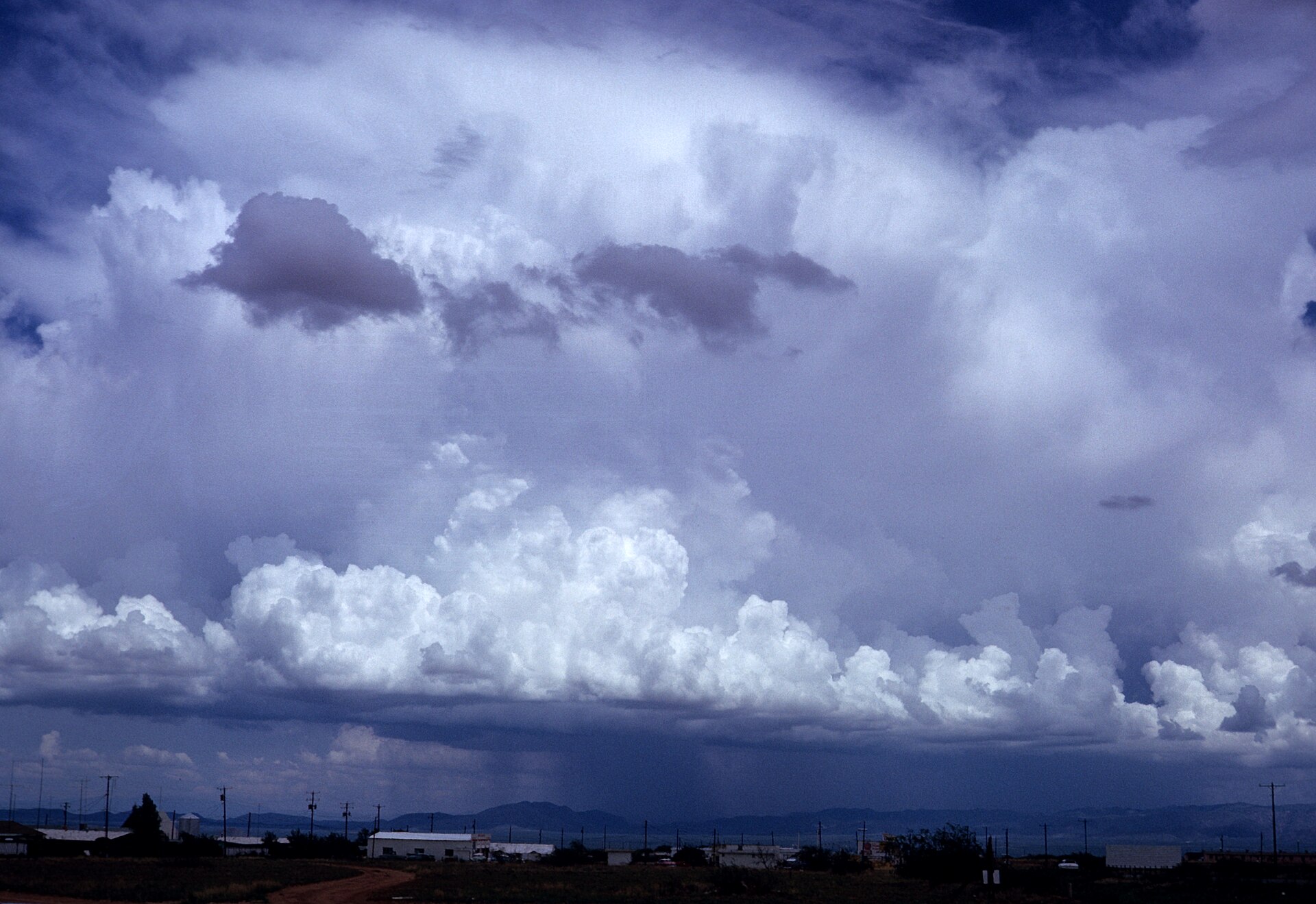

A slot canyon is a drain. That is the whole thing to remember. Every square mile of slickrock, mesa and dry wash above you funnels its rain into the crack you are walking through, and it does so fast, with almost no soil to soak it up. The water that fills a narrows on a July afternoon may have fallen twenty miles away under a cloud you never saw. Learning to read the sky, the ground and the forecast is not an optional skill in canyon country. It is the skill.
Why slot canyons flood the way they do
Desert rock sheds water like a roof. A thunderstorm that drops half an inch of rain on a bare sandstone plateau sends nearly all of it downhill within minutes. Dry washes that have been silent for months begin to run, join, and pour into the nearest slot. Because the slot may be only a few feet wide, a modest volume of water becomes a wall that can rise from ankle deep to over your head in the time it takes to put your pack back on.
The flood carries what the storm loosened: sand, cobbles, logs, whole junipers. It is not water you can swim in. It is a moving slurry, and it arrives with a rumble that people who have heard it compare to a freight train. By the time you hear it, you have seconds, not minutes.
The dangerous part for hikers is the disconnect between where you are and where the rain is. Sun overhead means nothing. The drainage above a slot in southern Utah can reach up over high country that grabs storms your canyon walls hide from you completely.
Reading the forecast the right way
Start the night before with the point forecast for the canyon itself and, more importantly, for the highest ground in its watershed. A ten percent chance of thunderstorms sounds trivial. Spread over a drainage of two hundred square miles, it is a real chance that one cell will park over some part of it. Many experienced canyoneers will not enter a committing narrows with anything above about twenty percent during monsoon season, and they turn around when the forecast shifts overnight.
Know the calendar. In the Southwest the North American monsoon runs from roughly early July to mid-September, and afternoon storms build almost daily in that window. The safest hours are early morning; the deadliest are between about two and six in the afternoon. Spring and fall bring longer frontal systems that can rain for a day at a time, which floods differently but just as thoroughly. Check whether the ranger station or visitor center posts a flash flood potential rating. When it says probable or expected, the narrows are closed to you, whatever your permit says.
- Watershed, not canyon: look at the forecast for the whole drainage, including mountains you cannot see from the trailhead.
- Timing: plan to be out of any narrows by early afternoon in monsoon season.
- Recent rain: saturated ground and full potholes mean the next storm runs off faster.
- Talk to a ranger: a two-minute conversation in person is worth more than any app.
Signs on the ground and in the air
Once you are walking, the canyon gives you clues. Look at the walls for debris lines: grass, twigs and mud stuck ten or fifteen feet up tell you exactly how high past floods have run. Fresh mud, still damp, or water that has turned from clear to brown means something is already happening upstream. A sudden rise of even an inch, or the sound of running water where there was none, is your signal to leave now.
Overhead, watch for cumulus clouds that stack vertically and flatten on top into an anvil. Darkening to the north or east, a cold gust of wind that seems to come from nowhere, and distant thunder are all reasons to stop, even if you cannot see rain. A rumbling you feel as much as hear, a strange smell of wet earth on a dry day, or birds and insects going quiet are late signs.
The rule most people break
People push on because they are almost through, or because the car is at the other end. The canyon does not care where your car is. If the sky says go, go up, not on. A hundred feet of retreat to a ledge above the debris line beats a mile of hurrying through the deepest part of the slot.
What to do when it is happening
If water begins to rise, climb. Any ledge, chockstone or side gully above the debris line is better than the floor. Do not try to outrun it downstream; slots are full of chokes and dryfalls where the water piles up. Do not go into the water to save gear. A pack can be replaced.
Then wait. Floods in slots typically peak within an hour and drop within a few hours, though a long frontal rain can keep a canyon running overnight. Sit tight, put on a layer, eat something, and let it pass. This is why a small emergency kit, a headlamp and a warm layer belong in your daypack even on a two-hour walk.
I once sat for three hours on a sandstone bench in a side canyon of the Escalante with a friend, watching a chocolate river fill what had been a dry, sunny wash an hour before. We had heard thunder from the Aquarius Plateau, turned back, and climbed. It felt foolish at the time. It stopped feeling foolish very quickly.
Planning that keeps you out of trouble
- Know your exits: before entering, identify where the walls lower enough to climb out, and how far apart those spots are.
- Carry the map of the drainage: not just the canyon, but everything that feeds it.
- Set a turnaround time: and honor it regardless of how far you got.
- Camp high: never sleep in the wash bottom, however smooth the sand looks. Pick a bench well above the debris line.
- Leave a plan: tell someone your route and your latest return time.
Respect is not fear
None of this means you should avoid slot canyons. They are among the most beautiful places on earth, and thousands of people walk them every year without incident, because they went in the morning, checked the sky, and were willing to turn around. Reading the weather is a habit, like checking your mirrors. Build it, and the narrows will be there for you for the rest of your life.
