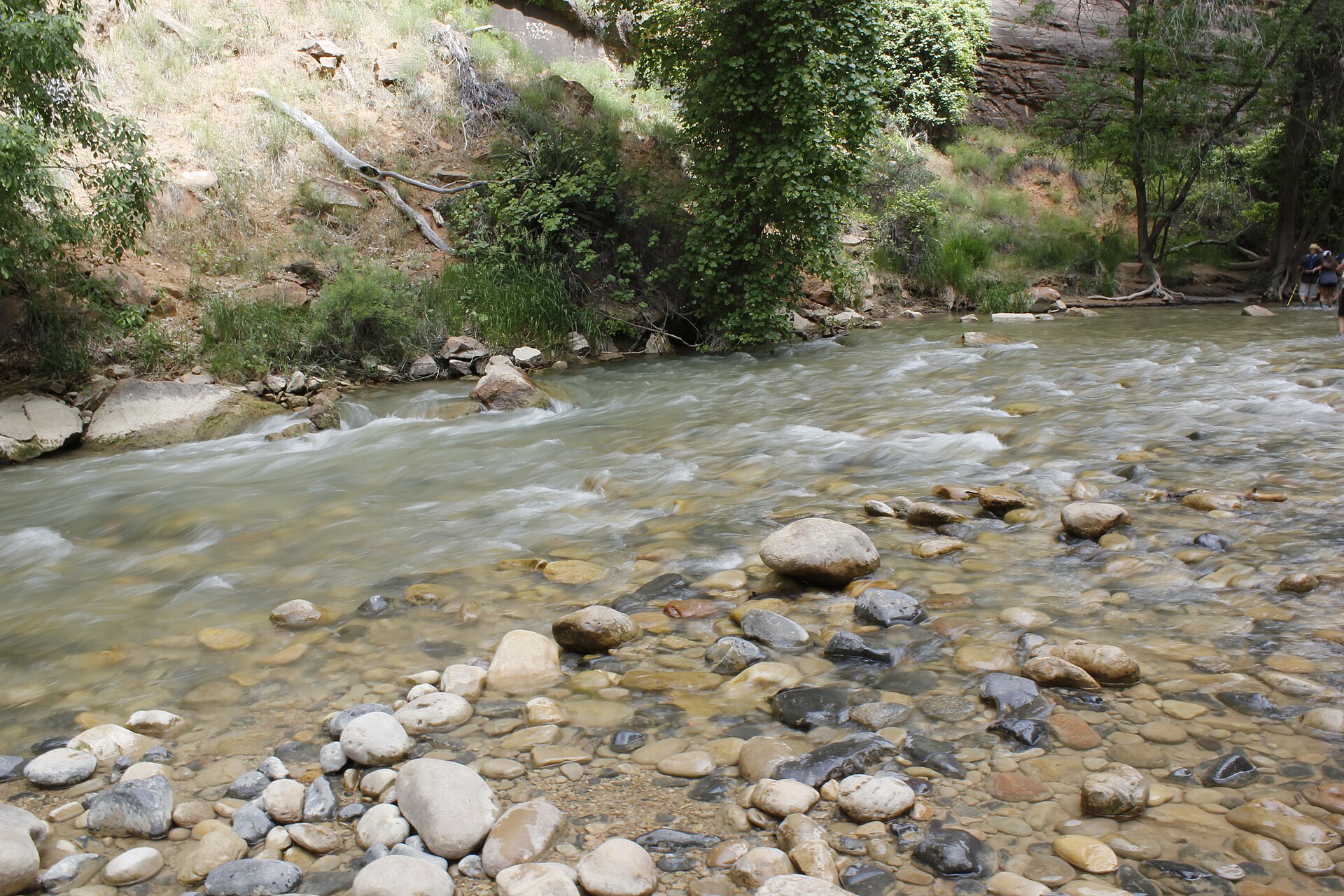

The Narrows is the one hike in Zion where the trail is the river. For most of the day you walk in the North Fork of the Virgin River, water somewhere between your ankles and your thighs, with sandstone walls rising a thousand feet on both sides and the sky shrinking to a ribbon. It is one of the great walks of the Colorado Plateau, and it is also a place that punishes casual planning. Here is how to do it well.
Two ways in: bottom-up or top-down
Most people hike the Narrows bottom-up. You ride the park shuttle to the last stop, the Temple of Sinawava, follow the paved Riverside Walk for about a mile, and step into the water where the pavement ends. From there you can go as far as Big Spring, roughly five miles upstream, before the park requires you to turn around. No permit is needed for this version, and you can bail whenever your legs or your nerve give out. The best part, the section called Wall Street beyond the mouth of Orderville Canyon, begins about two and a half miles in.
The top-down route starts at Chamberlain’s Ranch, outside the park on the east side, and runs about sixteen miles down to the Temple of Sinawava. It needs a wilderness permit whether you do it as a very long day or as an overnight, and the number of permits is limited. The overnight version uses a dozen designated campsites on benches above the river, and you carry everything, including your human waste bag, which the park issues with the permit. Getting to the ranch means a shuttle ride of about an hour and a half from Springdale on a dirt road; outfitters in town run those shuttles for a per-person fee that usually lands somewhere in the tens of dollars.
The permit system has changed more than once over the years. Check the park website for how it works this season rather than trusting an old forum post.
Reading the river before you go
The single most important number for the Narrows is the flow of the Virgin River, measured in cubic feet per second. The park closes the hike when flow is high, and even below the closure threshold the difference between a gentle walk and a fight is dramatic. Under about fifty cfs the river is mostly shin-deep with a few waist-deep pools. Around a hundred it pushes hard against your legs at every crossing. Spring runoff from the high country typically closes the Narrows for weeks between April and June, depending on the snowpack.
The second number is the flash flood potential the park posts every morning. It runs from not expected through possible and probable to expected. Probable means do not go. Possible is a judgment call that deserves an early start, a short plan and a willingness to turn around. Storms that cause floods in the Narrows often fall far upstream, out of sight, on the plateau to the north; blue sky over Springdale proves nothing. If the water turns muddy, rises, or starts carrying debris, climb to the highest ledge you can reach and wait it out, even if it means hours.
There is a third, quieter issue: the Virgin River has carried harmful cyanobacteria in recent summers. Do not drink or filter river water, keep your head above the surface, and do not let dogs or children play with the algae mats along the edge. Bring all your water from town. For a bottom-up day, three liters per person is a sensible floor.
Gear that makes the difference
- Canyoneering shoes or sturdy boots: the riverbed is bowling balls under moving water. Ankle support and a sole that grips wet rock matter more than anything else in your pack.
- Neoprene socks: your feet will be wet for hours, and the river is cold even in July. In spring and fall, add dry pants or a dry suit.
- A staff: a wooden hiking stick or a single trekking pole is your third leg on every crossing. Probe the bottom before you commit your weight.
- A dry bag: for your phone, camera, food and an insulating layer. Assume you will fall in at least once.
- Layers, not cotton: the canyon floor sees direct sun for only a short window each day, and wet cotton in shade is how people get cold in the desert.
Outfitters in Springdale rent complete packages, typically boots, socks and a stick, for a daily rate in the range of a modest restaurant meal, with dry pants or full dry suits adding to the price in cold months.
When to walk
Late September through October is the sweet spot: flows are usually low and steady, the monsoon has mostly passed, the cottonwoods along the Riverside Walk turn gold, and the crowds thin. July and August bring the highest flash flood danger of the year and afternoon thunderstorms almost daily; plan to be out of the narrowest section by early afternoon. Winter is beautiful, empty and cold; it is a dry-suit hike, and short days mean a realistic bottom-up turnaround at Orderville rather than Big Spring.
Whatever the season, catch one of the first shuttles of the morning. The walk upstream is slow, often barely a mile an hour, and everyone underestimates it.
A night between the walls
If you draw an overnight permit, the campsites sit on sandy benches a few feet above the water, tucked under overhangs or beside boulders. There are no fires. Dinner is a stove and a pot while the light drains out of the slot and the walls go from orange to grey to black. Then the sound takes over: the river, a constant hush that sounds like distant traffic until you stop listening for anything else.
Morning is cold. The sun does not reach the river until late, and you will pull on wet neoprene in the shade. Start walking anyway; the movement warms you, and the second day’s section through Wall Street, with its mossy seeps and hanging gardens, is the reason you came.
Common mistakes we see every year
- Starting at noon: people ride the shuttle at midday, reach Orderville at three, and walk back in fading light and rising afternoon flood risk.
- Ignoring the rating: a probable flood rating with sunshine overhead fools people every summer.
- Crossing fast water head-on: angle downstream, face slightly upstream, keep your staff planted, and unbuckle your hip belt before deep crossings.
- Sneakers and cotton socks: blisters, bruised feet and a cold, miserable afternoon.
- Skipping the human waste bag: on the top-down route it is required, and the campsites are small; the rule exists because the alternative is obvious.
Worth every wet step
The Narrows rewards patience more than fitness. Move slowly, look up often, and let the river set the pace. Done right, on the right day, it is the kind of hike that resets what you expect a trail to be.
Read next: Cuyahoga Valley National Park Hiking: Trails, Falls and Timing
