
I want to tell this one carefully, because the version I told at the trailhead the next morning made me sound calmer than I was. We were camped on a sandstone bench above a tributary of the Escalante River in the second week of September, two of us, on the third night of a five-day loop. The sky had been clean all day. That is the first thing to know about the night the storm came over the rim: there was no storm where we were, not at first.
The bench
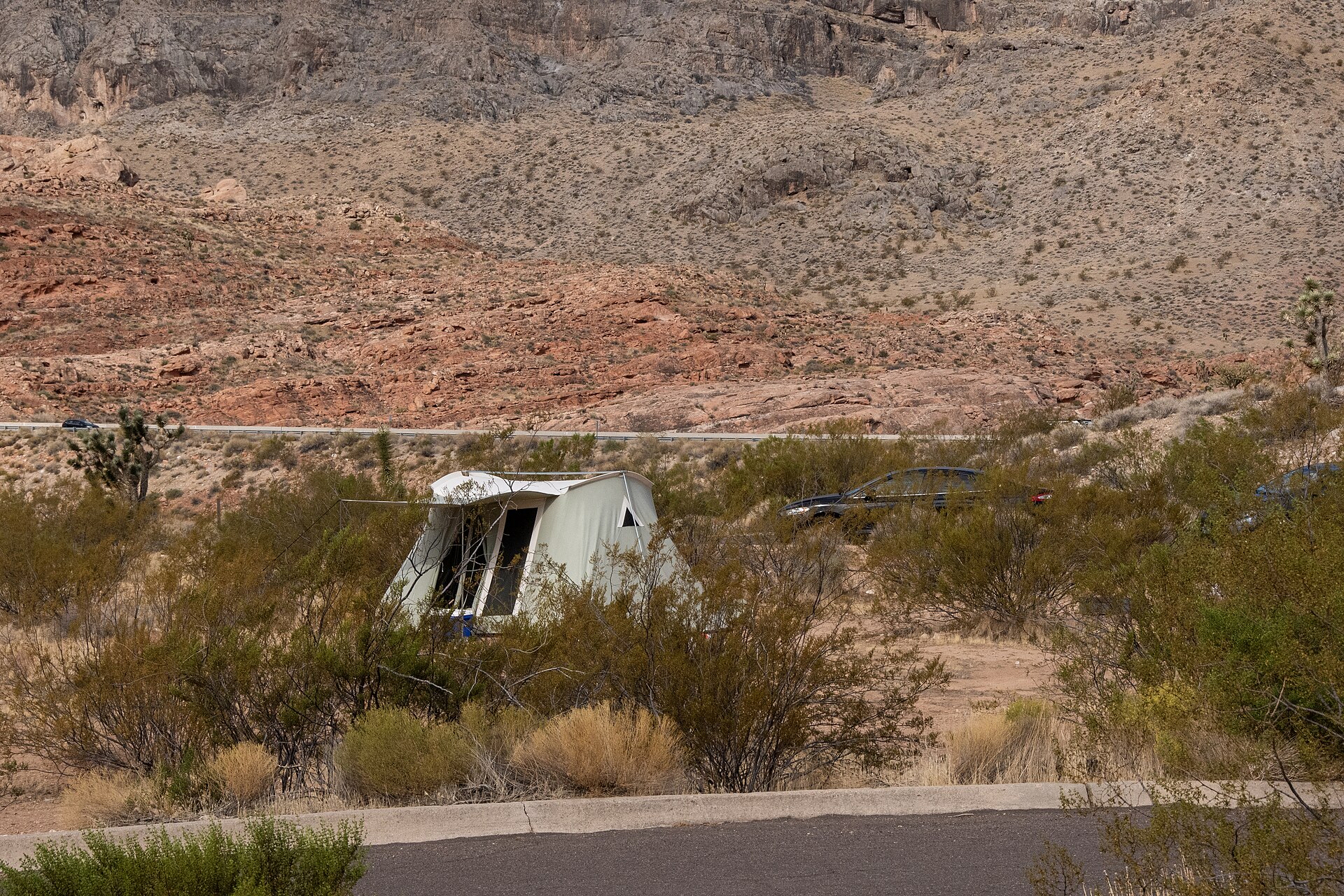
We had picked the site for the reasons you pick sites in canyon country. Flat slickrock with a lip of sand for the tent, a cottonwood for shade, a pool in the creek fifty yards downstream for water. It was maybe twenty feet above the streambed, and we had talked about that, because we always talk about that. Twenty feet felt like a lot. The creek was a foot deep and clear and made the sound creeks make when nothing is happening.
Dinner was early. The light came off the wall across from us in the long orange way that makes you forget to watch the horizon. Around seven my partner pointed at the rim to the west and said, quietly, that it had got dark up there. Not sunset dark. The kind of dark that has edges.
What it sounded like
The wind arrived first, downcanyon, cool and smelling of wet rock. Then the thunder, far off, a low rolling that did not stop between rolls. It never rained on us more than a few fat drops. That is the part I keep coming back to. We stood on the bench in dry shirts and watched lightning walk along a rim that was twelve or fifteen miles away, and the creek at our feet was still clear.
The change in the creek was the first real signal. It went from clear to the color of coffee with milk in about the time it takes to say it, and the level came up a few inches, and the sound changed from a trickle to something with a body. We moved the packs off the sand onto the rock and started stuffing the tent. I remember thinking we were overreacting.
Then the noise came around the bend upstream. People describe it as a train and that is close, but a train is a steady thing and this had a grinding underneath it, rocks moving on rocks. The front of it was not a wall of water. It was a wall of sticks and foam a couple of feet high with the water behind it, brown and fast and full of things, and it filled the streambed from side to side in seconds. A cottonwood log the length of a car went past at the speed of a bicycle. The pool we had been drinking from was gone; the whole floor of the canyon was moving.
The hour we stood on the rock
The water came up to within six or seven feet of the bench. I know that because I put a stone at the edge of the wet sand in the last light and it was still there in the morning. We did not sleep. We sat on the slickrock with our headlamps off and listened to the canyon roar and watched the flashes on the rim, and at some point it started to rain on us properly and we put the tent back up on the highest part of the rock and lay in it listening, which is worse than watching.
The peak was maybe an hour after the front. By midnight the sound had dropped a register. By first light the creek was a chocolate river three feet deep and still too fast to cross, and the streambed was a different shape than it had been the evening before: the sand bar gone, a new log jam at the bend, the cottonwood we had cooked under with a line of debris wrapped around its trunk at chest height.
What we had done right, by luck as much as sense
We had camped high. Not high enough to feel good about afterward, but high enough. We had camped on rock, not in the sandy floor a hundred yards downstream where there was a better tent spot and we had almost stopped. We had filled every bottle before dinner, which meant we did not have to think about the brown water until it cleared. We had an extra day of food, because we always do, and we used it: the creek was not crossable until the afternoon of the next day, and the route out crossed it eleven times.
We had also read the forecast at the trailhead, which said a thirty percent chance of afternoon storms, and had decided that thirty percent was a number you could live with. It is. But thirty percent over the high plateau where the canyon collects its water is not the same as thirty percent over your tent, and I had not really understood that until the wall of sticks came around the bend.
The morning after
We walked out a day late, wet to the waist, through a canyon with a fresh coat of mud on everything up to the height of a person. At the crossings we linked arms and faced upstream and moved one foot at a time. The water was still the color of the rock. On the last bench before the trailhead there was a group setting up camp on the sand at the edge of the creek, and we stopped and told them, and they moved, and I hope they always do.
Takeaways
- The storm does not have to be on you. A canyon collects rain from country you cannot see. Watch the rim and the horizon in every direction the drainage comes from, especially in the monsoon months of July through September.
- Camp higher than feels necessary, and on rock. A few feet of sand above the creek is not a margin. A bench you have to scramble onto is.
- Read the water. Clouding, a small rise, a change in sound or a smell of mud arriving on the wind are all warnings that come before the noise.
- Fill up before dark. Water you have already treated is water you do not have to wade for.
- Never cross a flooding creek. Wait it out, even if it costs a day. Carry that day in your food bag.
- Tell someone your exit date and add a day. A search that starts because you are one day late in a flooded canyon is a search that did not need to start.
The thing I still hear
It is the grinding. Not the water, the rocks under the water, the floor of the canyon rearranging itself in the dark. I think about it every time I choose a campsite now, which is the point of telling the story.
