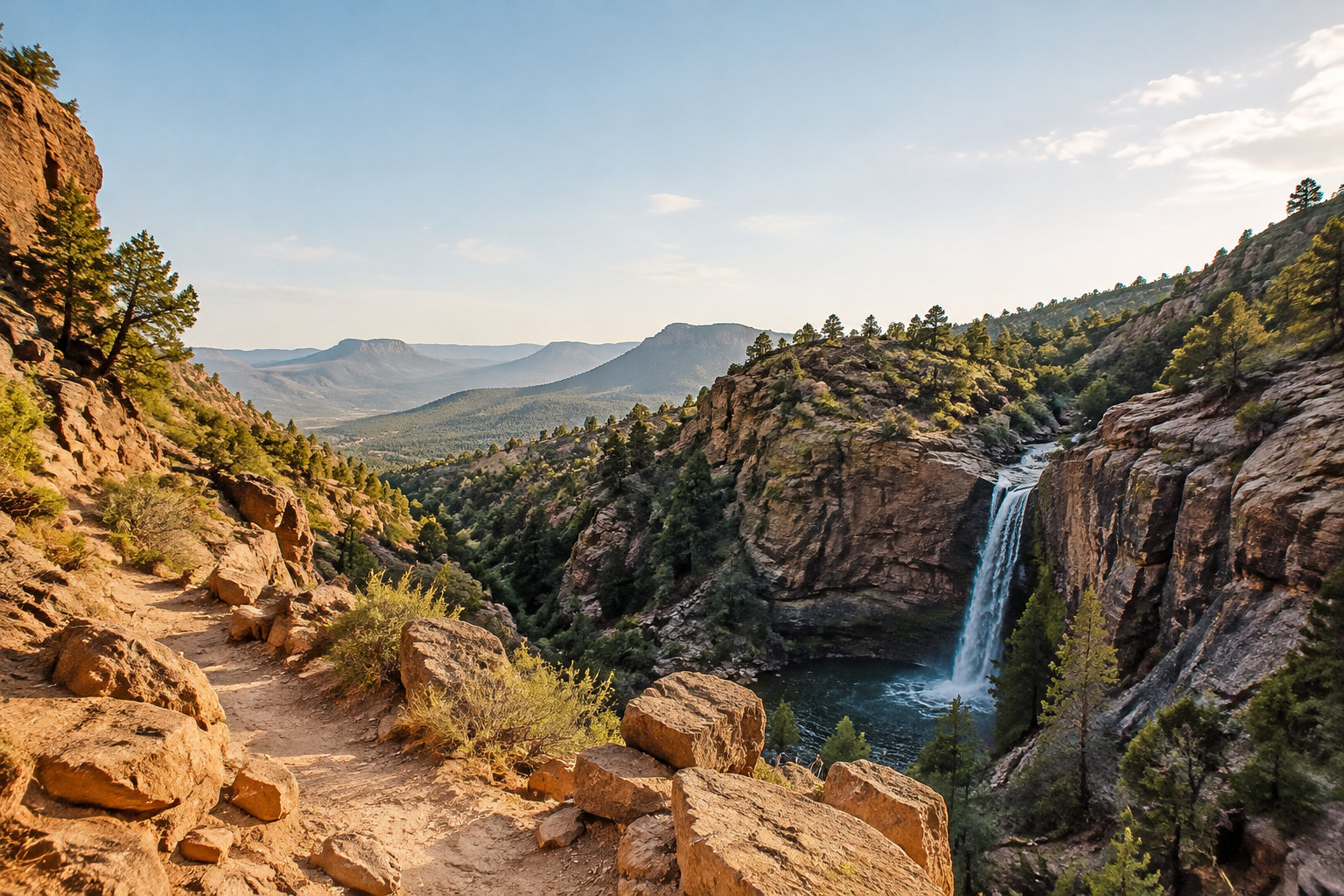

- The hike is 2.4 miles (3.9 km) out and back, with about 1,275 feet (389 m) of climbing.
- The falls sit about 1.2 miles from the trailhead, and you can see them well without climbing.
- Do not climb the rocks around the waterfall, which are slick and loose.
- Carry all your water, since the trail has no reliable refill point.
Contents
- The hike is short, but steep and demanding
- The route starts at 29th Street Trailhead
- The waterfall approach carries the main risks
- Seasonal conditions determine what to pack
- Frequently asked questions
The waterfall looks very different in spring than in winter.
Pick the wrong season or the wrong shoes and this short Ogden hike gets hard fast. Here is what to expect before you hike the Waterfall Canyon Trail.
The hike is short, but steep and demanding
Duration and difficulty
The length can be misleading.
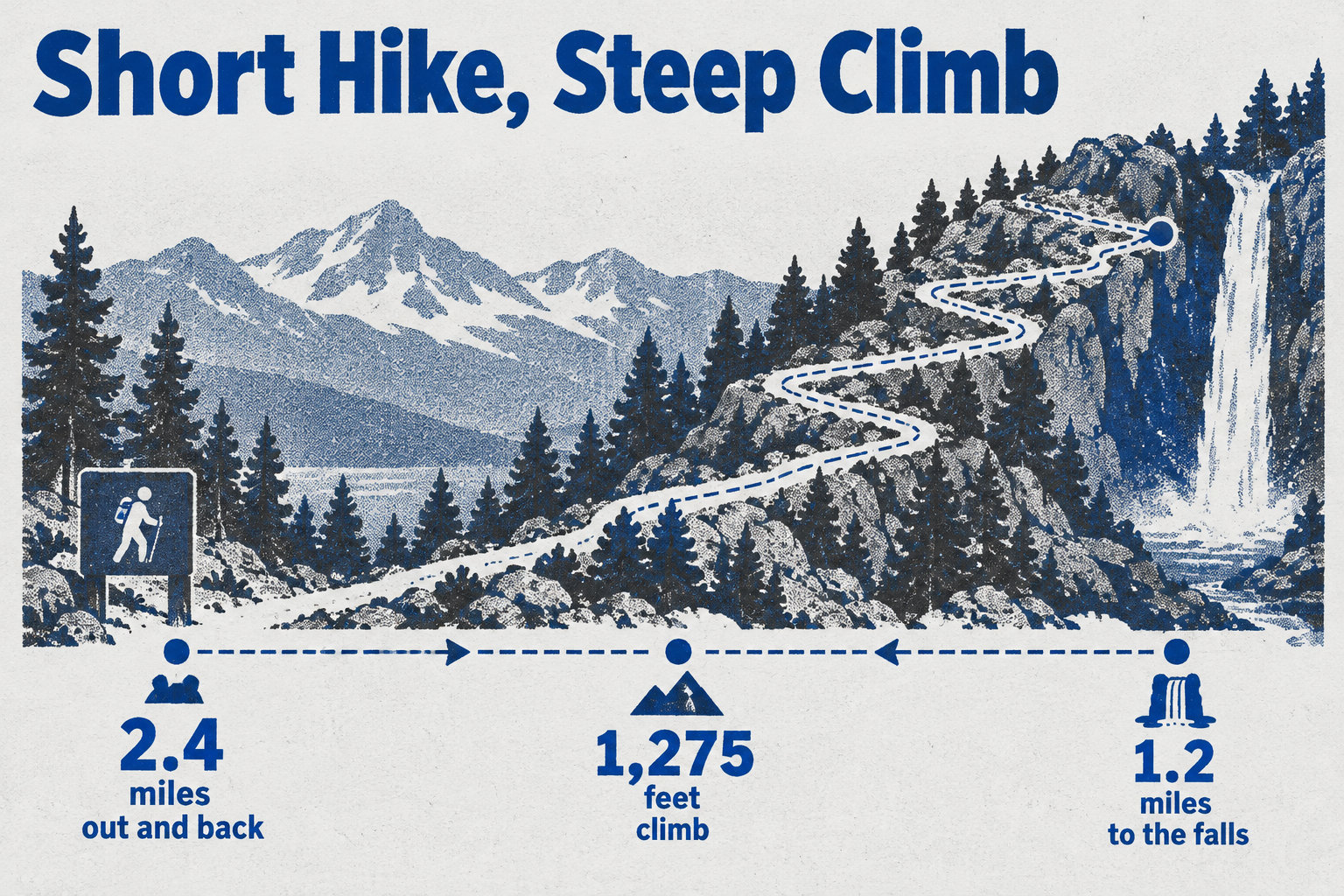
Waterfall Canyon Trail covers only about 2.4 miles (3.9 km) out and back.
Yet it climbs roughly 1,275 feet (389 m) along the way.
The falls sit about 1.2 miles from the trailhead, so almost everyone walks back the way they came.
The ground keeps changing underfoot.
You start on a wide, sandy path near the Bonneville Shoreline Trail. Then you move onto natural dirt, bare rock and sections along the creek.
Near the waterfall, the path turns into a loose, uneven scramble. It asks more of your legs and your balance.
Route and waterfall
The standard route begins at the 29th Street Trailhead and returns the same way.
The highest point reaches about 6,004 feet, while the lower end sits near 4,760 feet, so the climb is real.
The waterfall drops about 200 feet down the canyon wall. The flow is at its best in spring and early summer, when snowmelt feeds the creek.
In winter, the same water often freezes into a curtain of ice. It is a striking sight, but a very different hike.
The route starts at 29th Street Trailhead
Getting to the trail
From central Ogden, head east on 29th Street toward the mountains. The road ends at the trailhead, right against the foothills.
The first stretch climbs before bending south toward the Bonneville Shoreline Trail. After about three-quarters of a mile, the wide path reaches the shoreline trail at the mouth of Waterfall Canyon.
A wooden bridge near the canyon mouth shows you where to go. Cross it, then pick up the trail that starts a short way south of the bridge and runs east along the creek.
Access rules and visitors
Private property borders parts of the route on both sides. Stay on the marked trail and keep out of closed areas. Don’t cut across neighboring land, even when a shortcut looks tempting.
Dogs are welcome but must stay on a leash. Carry out what they leave behind, and keep them close near the creek, the bridges, the narrow sections and the busier approaches.
Parking and facilities
At the 29th Street Trailhead, you’ll find room for about 30 vehicles. Spring and summer weekends fill quickly, so plan to arrive early.
Drinking water is available. The trail has no dependable treated source along the way, so fill your bottles before you set off.
Restrooms are available at the trailhead.
Using the trailhead is free. There is no entrance fee for hiking access.
Before you leave, check local notices. Construction, fire restrictions or temporary closures can change the plan.
The waterfall approach carries the main risks
Approaching the falls
The final section is much rougher than the lower trail. Loose rock, steep ground and narrow passages make it a scramble, not a walk. Put your hands only on stable surfaces. Test each foothold before you commit your weight.
You can see the falls well from the canyon approach. You don’t need to climb anything. Going higher puts you on unstable, slippery ground. That’s a gamble not worth taking.
You may need to cross the creek more than once. In spring and early summer, high water can turn a simple rock hop into a wade. Wear footwear and clothing that can handle getting wet. Water depth shifts with snowmelt and recent weather, so a shallow crossing last week may be deep today. If fast water covers the stable route, turn around.
Dangers at the base
Warning: do not climb the rocks around or above the waterfall. They are jagged and slick, loose debris can shift during runoff, and falls in this area have caused deaths.
Keep a wide distance from the base of the falls. Never stand under overhanging rock. Spring runoff can loosen stones high in the canyon. Winter ice can drop chunks without warning.
Children need close, constant supervision on the rocky upper section. Past the bridges, the trail is far less forgiving. A short slip can easily cause a serious ankle injury.
If the route becomes too wet, unstable or steep for your group, turn around. The falls stay visible from lower viewpoints. No closer spot is worth a risky move.
Seasonal conditions determine what to pack
Spring and summer conditions
Spring brings the strongest flow. It also brings the wettest, slickest footing. Snowmelt pushes water and debris through the canyon. The rocks near the falls can be treacherous.
The lower trail may dry out before the canyon does. Expect muddy patches, wet crossings and faster water after warm weather or rain. Avoid the mud whenever a firmer line is available.
Summer is generally drier. But the steep climb and exposed rock are still there. Carry enough water for the whole outing, because the trail offers no reliable refill point.
Fall conditions can shift quickly as temperatures drop. Check the forecast. Allow extra time if rain, early snow or freezing temperatures could affect the upper section.
Winter conditions
Snow and ice can show up on early- and late-season hikes. Without proper footwear, the route becomes dangerous. Shaded stretches may stay icy even when the trailhead looks clear.
A frozen waterfall can form a broad white curtain over the rock face. Treat that ice as a hazard, not a climbing feature. Keep well clear of falling ice and the unstable rocks beneath it.
Before you leave, look up a recent trail update, the Ogden area forecast and any current notices. Trail organizations regularly publish seasonal warnings about runoff, mud, snow and ice.
Essential equipment
Here’s what to bring for this route. For footwear, choose hiking shoes or boots with firm tread and good support.
Smooth-soled casual shoes are a poor choice on loose rock and the steep return.
For traction, bring microspikes when ice is present or likely. They help on the shaded upper trail. But they don’t make the waterfall rocks safe to climb.
Pack a waterproof outer layer and an insulating layer in spring, fall and winter. Spray and shade make the canyon noticeably colder than the lower trail.
Sunglasses, sunscreen, a hat and a compact snack cover the exposed approach and the climb back.
Winter is usually quieter. But fewer visitors also means icy sections see less traffic and stay harder to cross. Choose a busy daylight window rather than assuming an empty trail is a safe one.
Waterfall Canyon Trail rewards hikers who decide where to stop before they set out. The canyon approach gives a clear view of the falls without the slippery rocks. Hold to that spot when the ground gets worse.
Frequently asked questions
Is Waterfall Canyon Trail open year-round?
Yes, you can hike it in every season, but winter conditions are much harder.
Snow and ice can make the steep upper section dangerous. Bring traction gear, and turn around if the surface no longer gives secure footing.
Does Waterfall Canyon Trail require a permit?
No permit is needed for the standard route from the 29th Street Trailhead.
Temporary closures for construction, fire conditions or maintenance can still limit access. Check local notices before you leave.
What is the best time of day to visit Waterfall Canyon?
Start early in spring and summer, before parking and trail space fill up.
In winter, go during daylight hours so you can see icy rocks and the frozen falls clearly.
Can you see the waterfall without climbing?
Yes. The falls are visible from the canyon approach, so you don’t need to go near them.
Stay on stable ground. The rocks around the base are jagged, slick and loose, which makes them a poor place to climb.
Is the waterfall always flowing?
No. The flow depends on the season and on recent weather.
Late-season flow tends to be lower, so a thin or dry-looking waterfall in late summer is normal.
