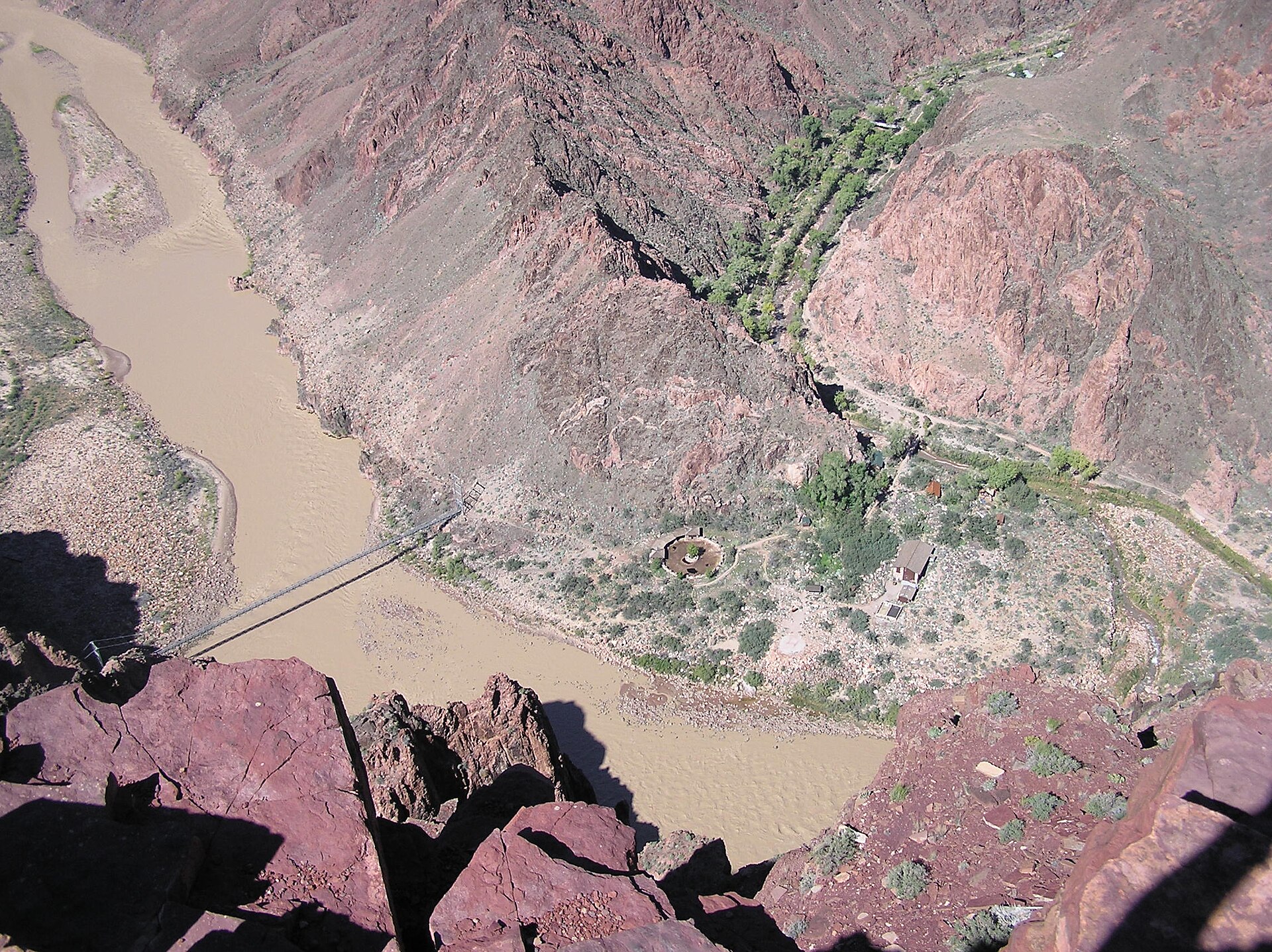

The best Grand Canyon hike is the one that fits your weakest hiker. Start on the rim or hike a short way into the canyon on a corridor trail. Save the steeper, unmaintained routes for experienced desert hikers, and never try to go from rim to river and back in a single day.
Why does the trail you choose matter so much?
Every trail into the canyon goes down first. That means every hike ends with a climb. The park puts it bluntly: there are no easy trails into or out of the canyon.
Rescues are routine. The National Park Service reports hundreds of rescues a year. Most start with a plan that ignored the climb back or the heat.
Picking a trail is a safety decision. Think about the least fit person in your group. Think about the season. Think about how much daylight and water you really have.
The park also points out that a day hike can be safer than an overnight trip into terrain that is beyond any one member of your group. Match the trip to the group, not the other way around.
One more point on timing. Spring is the safest season, with mild temperatures and thinner crowds. Summer brings long days and heat that can turn dangerous fast.
Which trails suit which level?
Think in three tiers.
Easy: the Rim Trail
The Rim Trail runs from the village area to Hermits Rest. Part of it is paved and accessible. It is mostly flat and gives you views into the inner canyon without any climbing. You can use the shuttle buses to shorten or lengthen your walk. There is no water west of Bright Angel Lodge, so carry your own.
Moderate to hard: the corridor trails
Bright Angel and South Kaibab are the two main trails into the canyon from the South Rim. Both are steep. Both work as partial day hikes only.
- Bright Angel: starts just west of Bright Angel Lodge. Day hikes run up to 12 miles round trip. There is some shade and seasonal water, but pipeline breaks happen, so check water status first.
- South Kaibab: starts south of Yaki Point and is reached by shuttle bus. Day hikes run up to 6 miles round trip. The views are the best for a short hike. There is no water on the trail and little shade.
A popular turnaround on South Kaibab is Ooh Aah Point, a bit under a mile down. Cedar Ridge is a sensible limit for day hikers in hot weather. The round trip there is 3.1 miles.
Hard: Hermit and Grandview
These trails are tougher than the corridor trails. They are unmaintained and steep. The park lists them for experienced desert hikers and recommends hiking boots.
- Hermit: Santa Maria Spring is 5 miles round trip. Dripping Springs is 7 miles round trip. Spring water must be treated.
- Grandview: Coconino Saddle is 2.2 miles round trip. Horseshoe Mesa is 6.4 miles round trip. The park rates it very steep.
How do heat, water and timing change the plan?
Heat is the main hazard. The canyon bottom can run about 30 degrees warmer than the rim. In summer the inner canyon passes 100 °F on most days.
Plan around that.
- Start at sunrise or before. Be off the exposed sections before midday.
- Carry more water than you think you need. One guide source says the park recommends at least a gallon per person per hike.
- Wear a hat, sunglasses and sunscreen. The sun is strong even in the shoulder seasons.
- Take electrolytes as well as water.
Water on the trails is limited and seasonal. Bright Angel has refill points. South Kaibab has none along the way. Always check current status at the Visitor Center or the Backcountry Information Center before you go.
Winter has its own risks. The upper parts of Bright Angel and South Kaibab can be icy in winter and early spring. Traction devices or poles help. Ask a ranger about conditions first.
Here is the counterintuitive part. Going down feels easy, so you want to keep going. The climb out is where people get into trouble. Turn around early, well before you feel tired. Save your energy and your water for the way up.
What about the North Rim, permits and overnight trips?
The North Rim sits at an average elevation of about 8,000 feet. It is roughly 1,000 feet higher than the South Rim, so temperatures run cooler.
The North Kaibab Trail is the only maintained trail into the canyon from the North Rim. Short options exist, such as Coconino Overlook at 1.5 miles round trip. A trip to Roaring Springs is 9.4 miles round trip and extremely strenuous. The park says to expect 7 to 8 hours and to start before 7 a.m. It advises against going beyond Roaring Springs on a day hike.
Options on the North Rim may be limited. Several trails there have been closed because of fire damage. Check the Backcountry Updates and Closures page before you plan.
The park does not require permits for noncommercial day hikes. Stays at Phantom Ranch or in the inner canyon campgrounds need advance reservations. Popular multi-day routes such as rim-to-rim are hard to get, so book as far ahead as you can.
If you want help, a guided trip can handle the planning and tailor the route to your group. The Grand Canyon Conservancy Field Institute also runs single-day educational hikes on both rims.
Frequently asked questions
Can you hike from the rim to the river and back in one day?
No. The National Park Service advises against attempting it, especially in summer, as extreme heat can quickly become life-threatening. Split the trip over two days or turn around higher up.
Do you need a permit for a Grand Canyon day hike?
Not for noncommercial day hikes. Overnight stays in the canyon do require advance reservations or permits. Check the park’s current rules before you go.
What is the best Grand Canyon hike for beginners?
The Rim Trail is the easiest choice. It is mostly flat, and part of it is paved. If you want to go below the rim, try a short out-and-back on South Kaibab to Ooh Aah Point.
When is the best time to hike in the Grand Canyon?
Spring is the best season for many hikers. Temperatures are milder and crowds are thinner than in summer. Watch for snow and ice on the upper trails, especially on the North Rim.
Related reading
- Cooking at a Canyon Camp When There Is a Fire Ban
- Essential Gear for Unforgettable Canyon Adventures
Sources
- Day Hiking – Grand Canyon (nps.gov, accessed 2026-11-02)
- Grand Canyon Hiking: 6 Top Trails to Add to Your List (57hours.com, accessed 2026-11-02)
- The best Grand Canyon Hikes: stunning walks from the South … (walkmyworld.com, accessed 2026-11-02)
Photo: South Kaibab Trail October 2004, by Notary137 at English Wikipedia, Public domain (Wikimedia Commons)

